


The Problem: The “Time Tax” and Administrative Burden
Government programs often struggle to reach the people they are designed to serve. One overlooked reason is that interacting with government services can be surprisingly difficult. Confusing forms, complex applications, and fragmented systems create what researchers call a “time tax,” or administrative burden.
Have you ever needed to stop to look something up while filling out a confusing form? Or worse, find someone to ask for help? We all know this frustration, but behind the scenes it has even more negative effects than we realize. Confusing services make government programs more expensive and less effective. This post explains how ‘administrative burden’ creates these hidden costs, how better service design can reduce them, and highlights a few teams already doing this work.
All bureaucracies produce confusing paperwork, but the constraints of government can produce uniquely challenging interactions. When interacting with a government service requires excessive time and effort from users, researchers refer to it as a “time tax” or “administrative burden.”1 We all face this ‘time tax’ in tax season, but the burden is hardest on those who interact with government services frequently, such as benefits recipients, builders, or small businesses. For example, New Yorkers wading through the fragmented benefits ecosystem are required to submit documents and answer confusing questions often through systems that are difficult to access or understand. Missing a single step can delay or derail an application entirely.
Time Tax / Administrative Burden: The costs to people interacting with government programs in terms of time spent navigating user-unfriendly interfaces.
Behind the veil of government, this paperwork produces an additional cost: the burden posed on the employees who have to process it. Think about it like this: every time you are confused and need support due to a preventable confusion, someone has to spend that time supporting you. Every time you submit burdensome paperwork, someone has to process it, likely on outdated technology. This means the time of agency staff and constituent liaisons, that we fund, is funneled away from other work. In extreme cases, entire call centers, nonprofit programs, or even businesses exist solely to help people navigate these systems. This is often not the fault of applicants or frontline staff, but a result of systems that are not aligned with current needs. This damages the morale of public servants, reduces citizens trust in government, and results in inefficient public spending.
Why Fixing Government Services Is Hard
There might seem like an obvious fix: make things simpler! From an outside perspective it’s easy to view this as a problem of bureaucratic incompetence. However, like most problems in government, if you look closely you will find smart, passionate people wading upstream through structural binds. For NYC, what are some of these structural constraints?
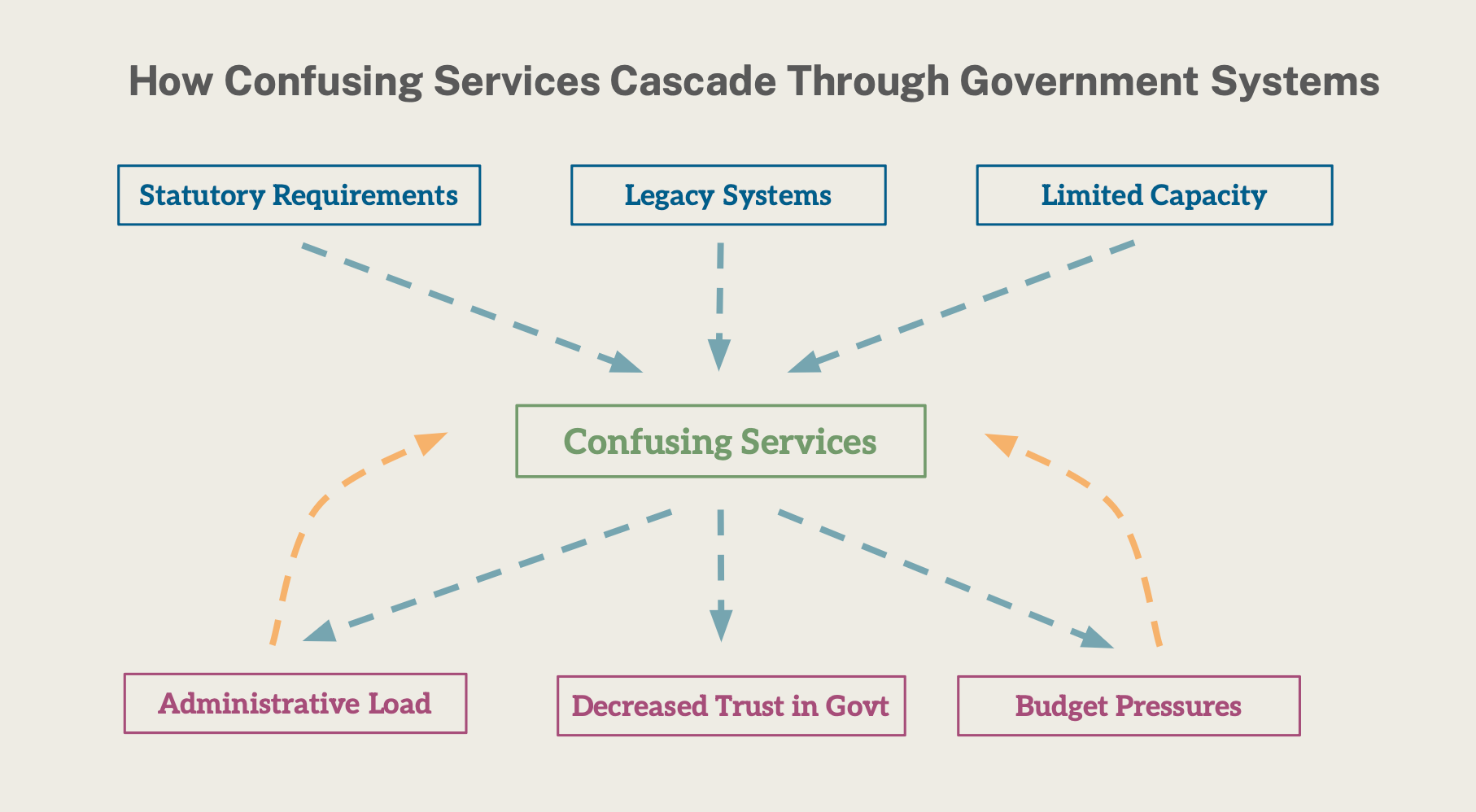
One is that many of the largest government programs are funded by the federal government (think SNAP, Medicaid, Section 8, Federal Tax Credits) through “Block Grants” to states and municipalities. These grants require the states and municipalities to fit requirements, such as confusing and rigid terms and questions. The resulting confusion and paperwork can cost millions more to process. In some cases, this complexity is not accidental, but even where there is no deliberate intent, many of the same burdens emerge. 2
There are structural hurdles even in situations where city administrators or legislators have more control (think CityFHEPS, SCRIE/DRIE, Building permits.) For example, contrary to popular belief, “the government” does not have all your data. In fact, on the city level, data is very siloed between agencies and protected by strict privacy laws, and much of this data is stored in ancient technology. Those with AI dreams will be frustrated to learn this.
There is another systemic problem: the rush of the budget cycle. Beyond just being frustrating, confusing services can create a reinforcing loop inside government budgets. These cycles are financial, but the result is that programs can fail to reach the people they were designed to serve.
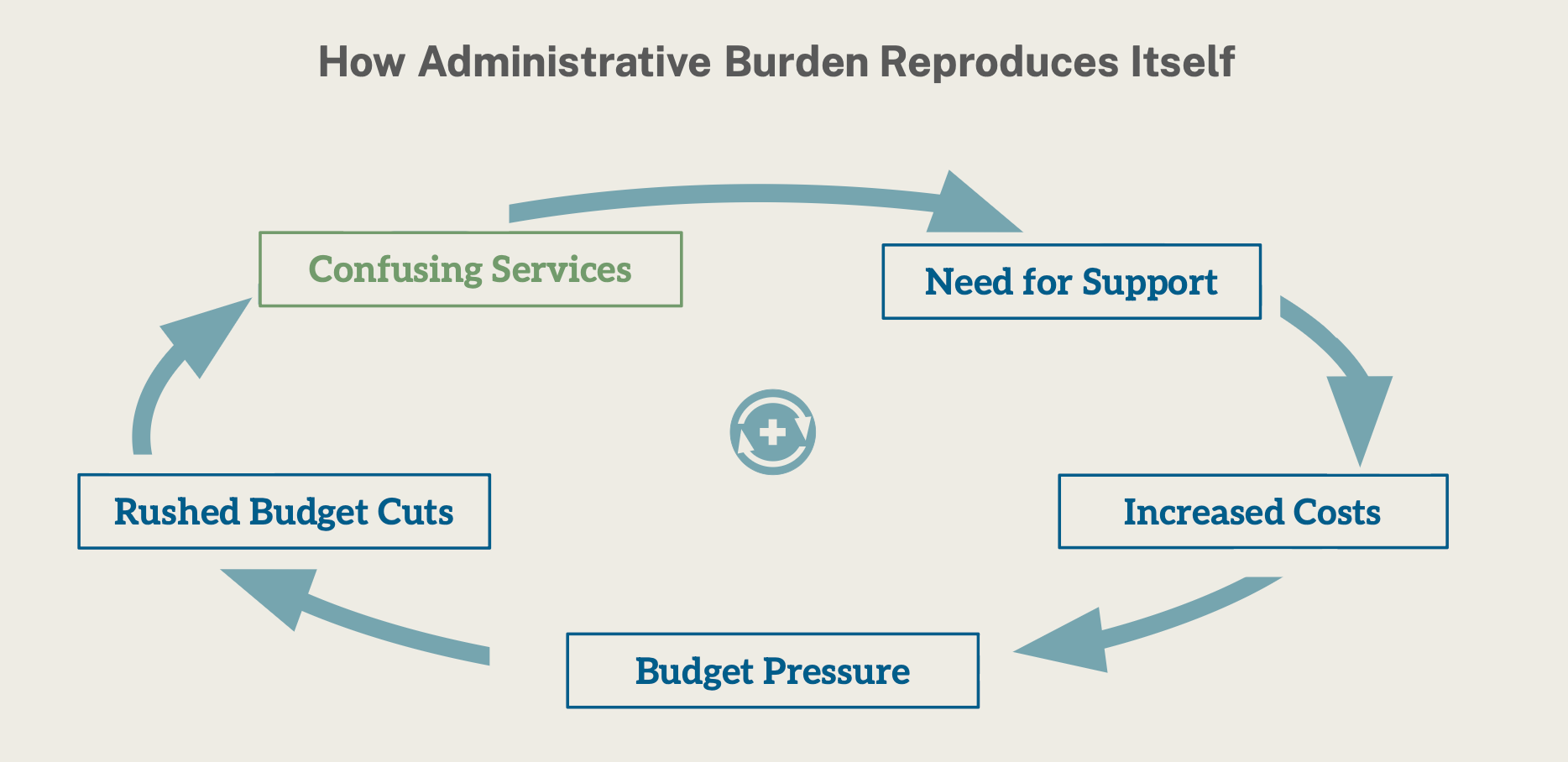
As confusing services increase costs, they increase budget pressure which results in more rushed budget cuts as the city struggles to fit its annual balanced budget requirement. Administrations and agencies are incentivized to look for savings in the present, which can make it hard to invest in simplifying services for the future. However more importantly than costs, this means that programs are not accomplishing their goals of serving residents.
The Solution: How Service Design Reduces Administrative Burden
A clear way to pull ourselves out of this loop is to make the services less confusing. Luckily, there is a more easily addressable constraint here: the lack of technical capacity in behavioral design.3 Behavioral Design / Service Design4 can teach us how to accommodate human needs to ensure successful experiences.5 This happens by iteratively and frequently prototyping and then testing with end users to arrive at a smooth product. The result of this process is effective, accessible, and dignified services.
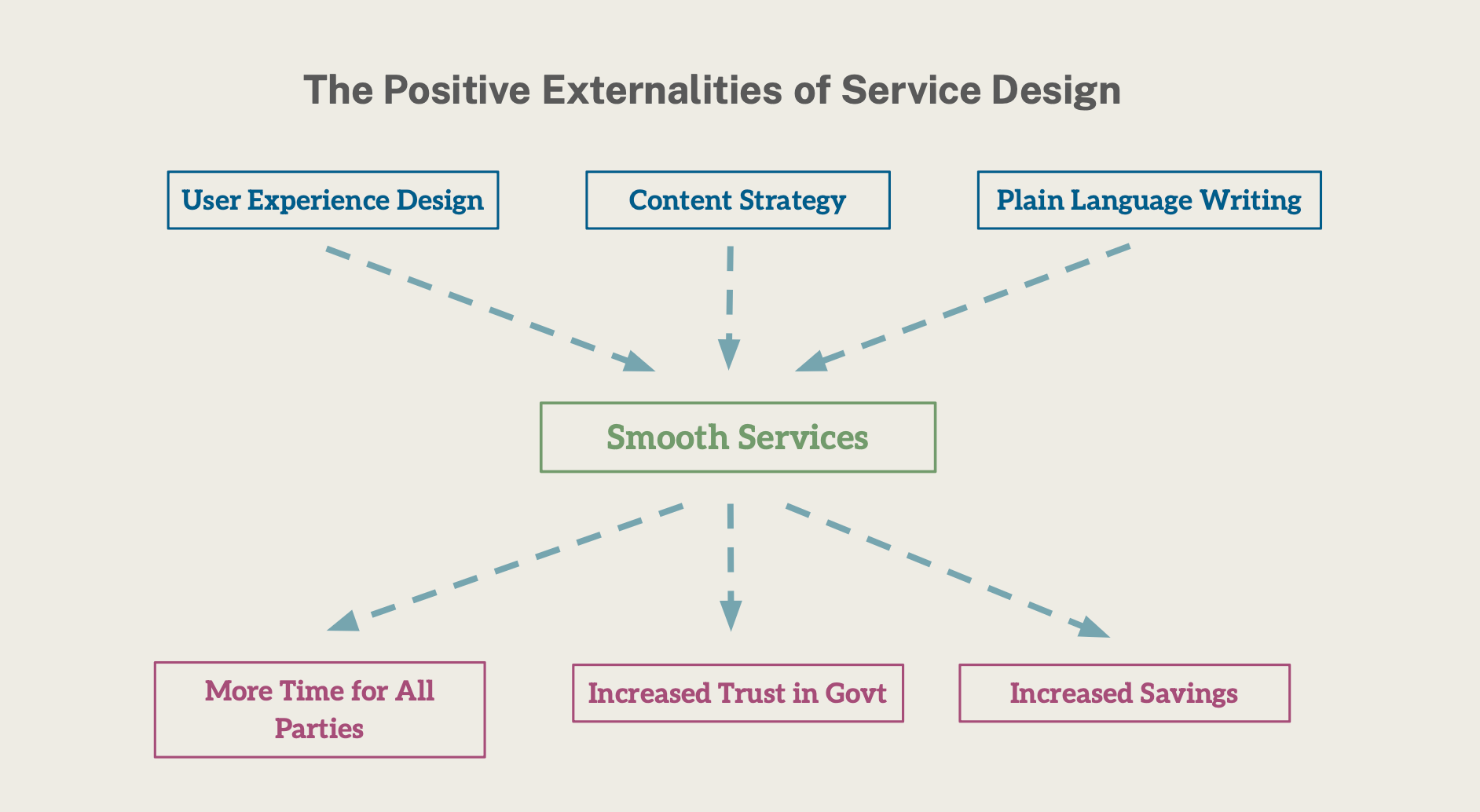
Smoother government services reduces the time tax on residents, increase trust in government, and sometimes relieve some of the budget pressure that distracts political energy from system-level improvements.
When I was a fellow at the Service Design Studio in the Mayor’s Office for Economic Opportunity, I was lucky enough to be exposed to some of the great people and teams doing work in this domain.
Examples of Service Design Improving Government
Many organizations and government teams are already working to reduce administrative burden through better service design. This is a short list that is not comprehensive.
The NYC.Gov Redesign
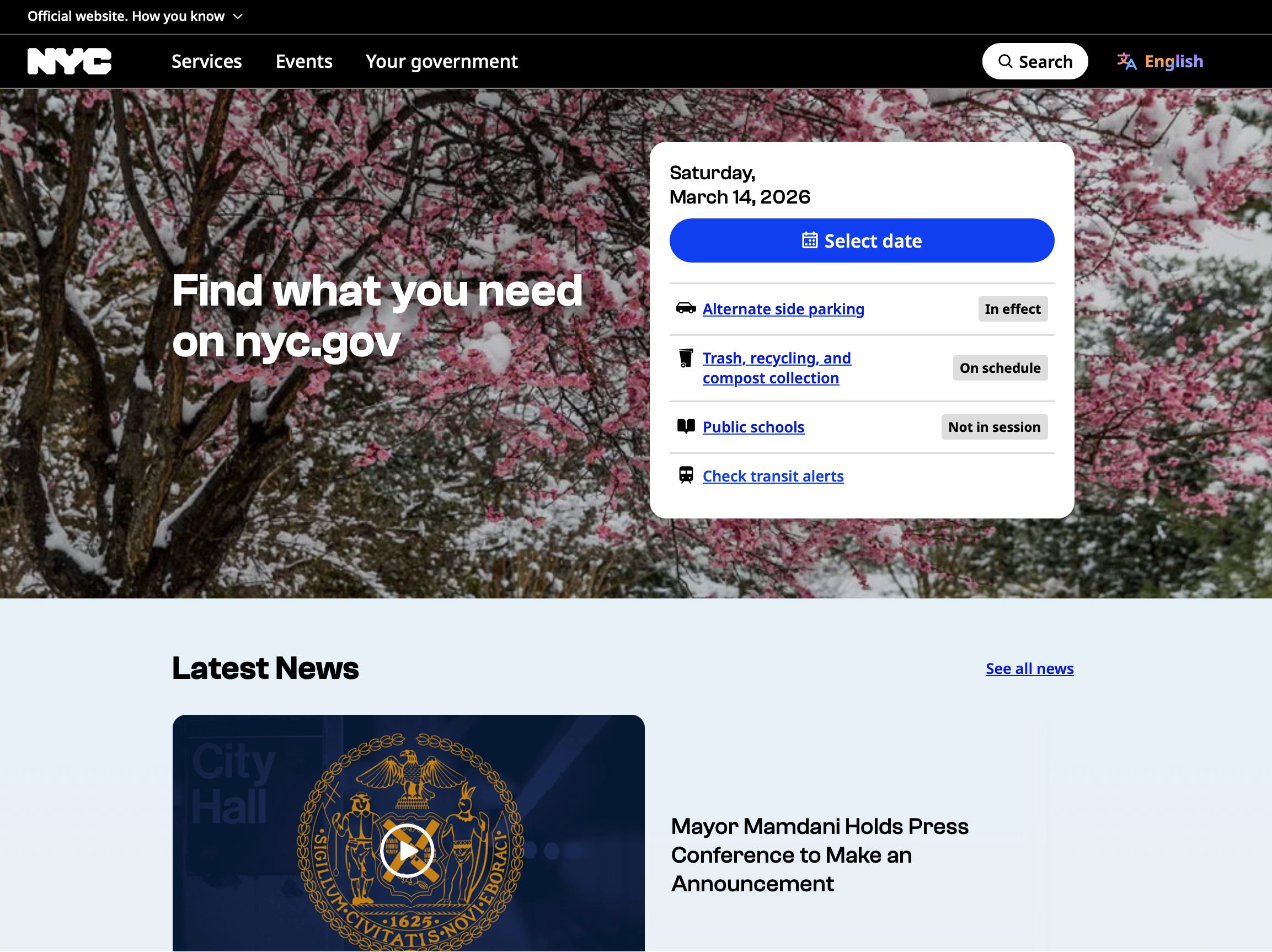
NYC.Gov was recently comprehensively redesigned with user-centered methods. This will continue to roll out across NYC government websites and is an exciting opportunity to streamline content and information architecture along the way.
In my understanding, the movement for smooth government portals was pioneered by the Government Digital Service in the UK.
About the UK Government Digital Service
Plain Language Training Resources for Government Staff
Plain Language Writing is a clear skill that government employees can learn to increase the effectiveness their outreach materials, applications, web content and more.
To learn more, here is a video advertising Plain Language Writing I made while at the Service Design Studio.
Form Redesign Workshops
Another cool opportunity is to deliberately up-skill city employees in behavioral design. The Mayor’s Office for Economic Opportunity organized a Form Redesign Workshop with Ideas42 to coach teams in applying behavioral design. The first cohort went very well and was documented in this blog post (which I may have helped write).
Organizations Advancing Service Design in Government:
If you are interested, there are many more organizations that do this work. This is not a comprehensive list but I offer it for your perusing.
Why This Work Matters
Better service design can save money, but more importantly it means that government programs actually work better for the people they are meant to serve. When services are easier to use, more residents access benefits, trust improves, and administrative costs often fall as a side effect. Investing in better service design will not solve every problem in government, but it is one of the most practical ways to make public programs work better for the people they are meant to serve.
As we’ve seen with the heartbreaking ending (for now) of DirectFile, there certainly are situations where the status quo benefits specific groups and is therefore deliberately sludge-y.
There are still structural issues that make implementing behavioral design hard: civil service laws, procurement rules, risk aversion, lack of internal capacity, etc. These should also be addressed.
Behavioral Design, User-Experience Design, Service Design, and Human-Centered Design are all different, but can be thought of similarly for the sake of government.
Can be thought of as the difference between an Apple TV or Roku remote and an old cable remote.