


During the pandemic, New Yorkers briefly treated streets differently. Parking spaces became restaurants and roads became playgrounds. We gathered in places previously reserved for cars and many of these changes were wildly popular. Despite current efforts to bring this back, why does the culture feel to have disappeared so quickly? The answer gives us insight into the politics of possibility.
Many underrate how much the physical environment teaches behavior by making certain actions ordinary, visible, and frictionless. These changes affect what feels possible. Temporary urbanism is powerful because it quickly changes lived experience, temporarily expanding collective imagination and creating constituencies for permanent change. But if these interventions are not stabilized materially, reversion pressure gradually constricts those possibilities again.
Cities are full of old decisions that continue educating us decades after the people who built them are gone. Highways, architecture, and public recreational spaces all change how we interact with the world around us, and therefore what we expect and collectively think is possible in the world.
The Existing Equilibrium:
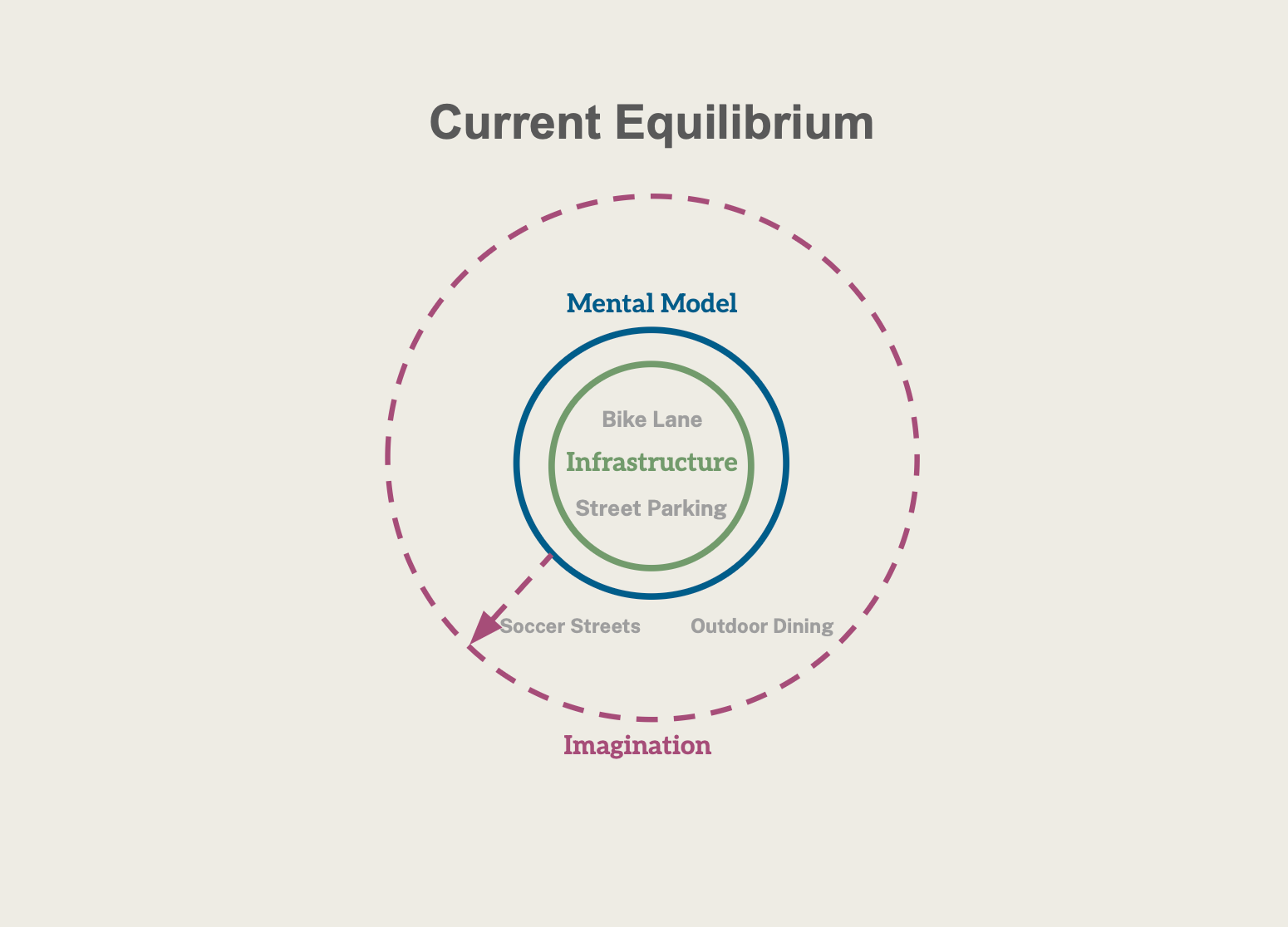
In the absence of temporary infrastructure, our collective mental model hovers around what the existing infrastructure enables.1 Individuals constantly imagine new things, pushing past the boundaries of the collective mental model, however these rarely change the imaginations of others.
Most of us think of streets as places for parking, driving, and the occasional bike lane as this is what we see. Some might imagine that the streets could be a place for sporting, childs play, or eating, but that is not a part of the collective mental model as it is divorced from the physical reality we engage with.
Temporary Infrastructure Expands the Mental Model
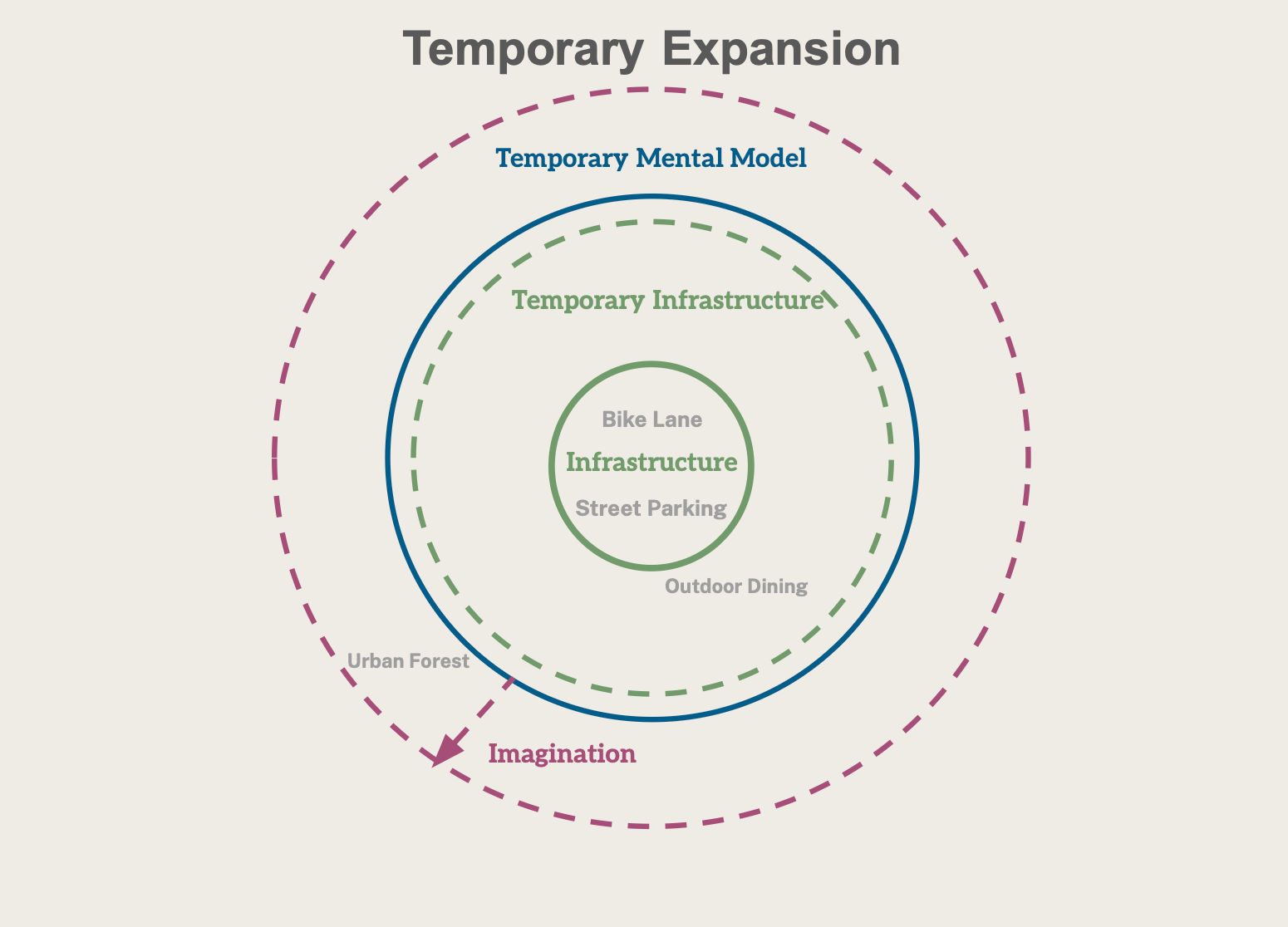
When temporary infrastructure is introduced, for example during the pandemic, the collective mental model expands to contain that piece of infrastructure. Those using outdoor dining now know that is possible, if not desirable. At this point, imagination expands to further frontiers. For example, we might now imagine urban forests or beer gardens.
When Possibility Becomes Permanent
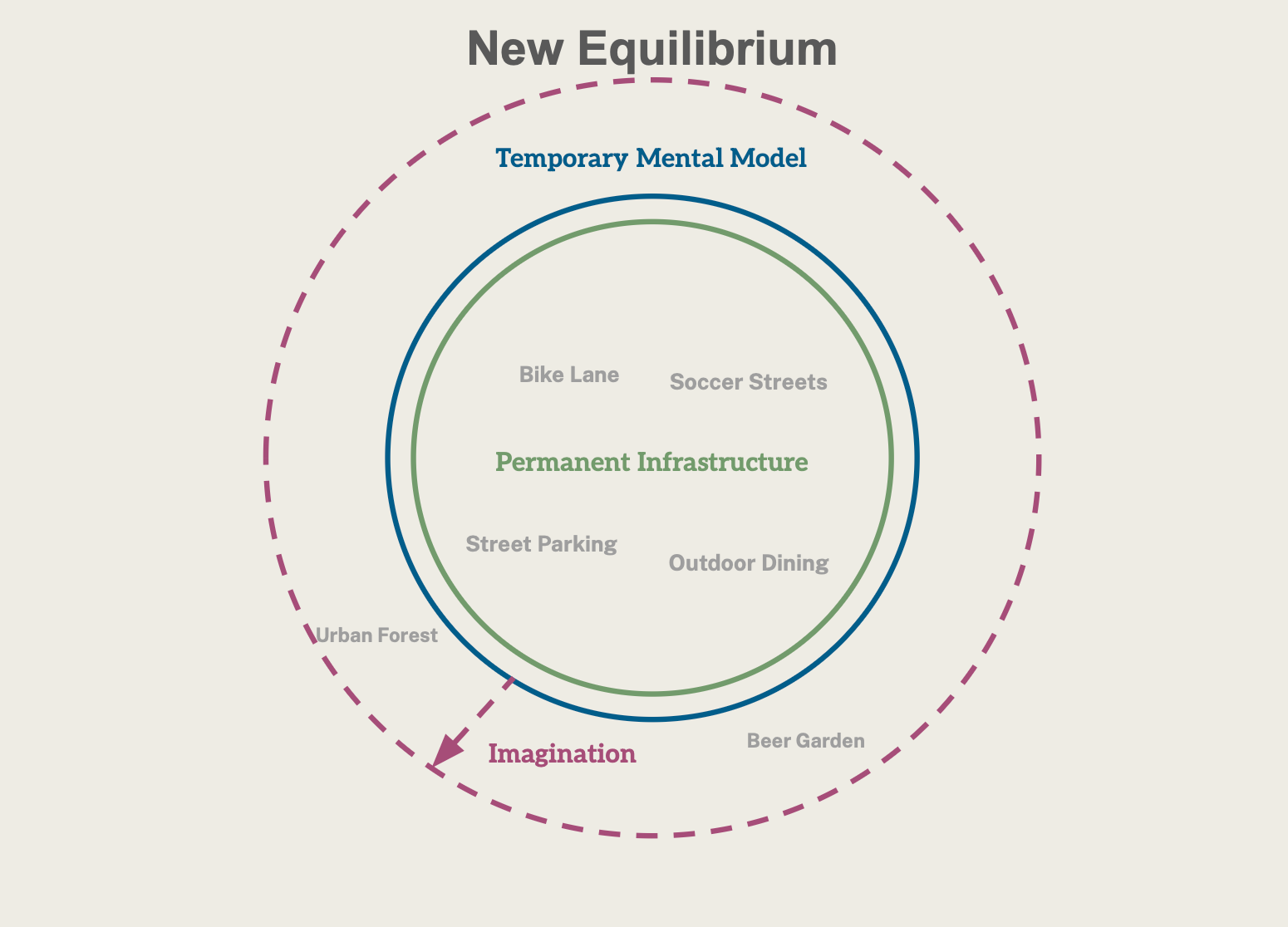
If we are able to make this new infrastructure permanent, the collective mental model expands to meet that new infrastructure. The result is that we arrive at a new equilibrium where imagination begins anew and we can continue to adapt until we are comfortable.
Protected bike lanes in cities like Amsterdam or Copenhagen no longer feel radical because they have persisted long enough to become ordinary. Infrastructure that once expanded imagination now defines the baseline from which new possibilities emerge.
Time Pressure and the Collapse of Possibility
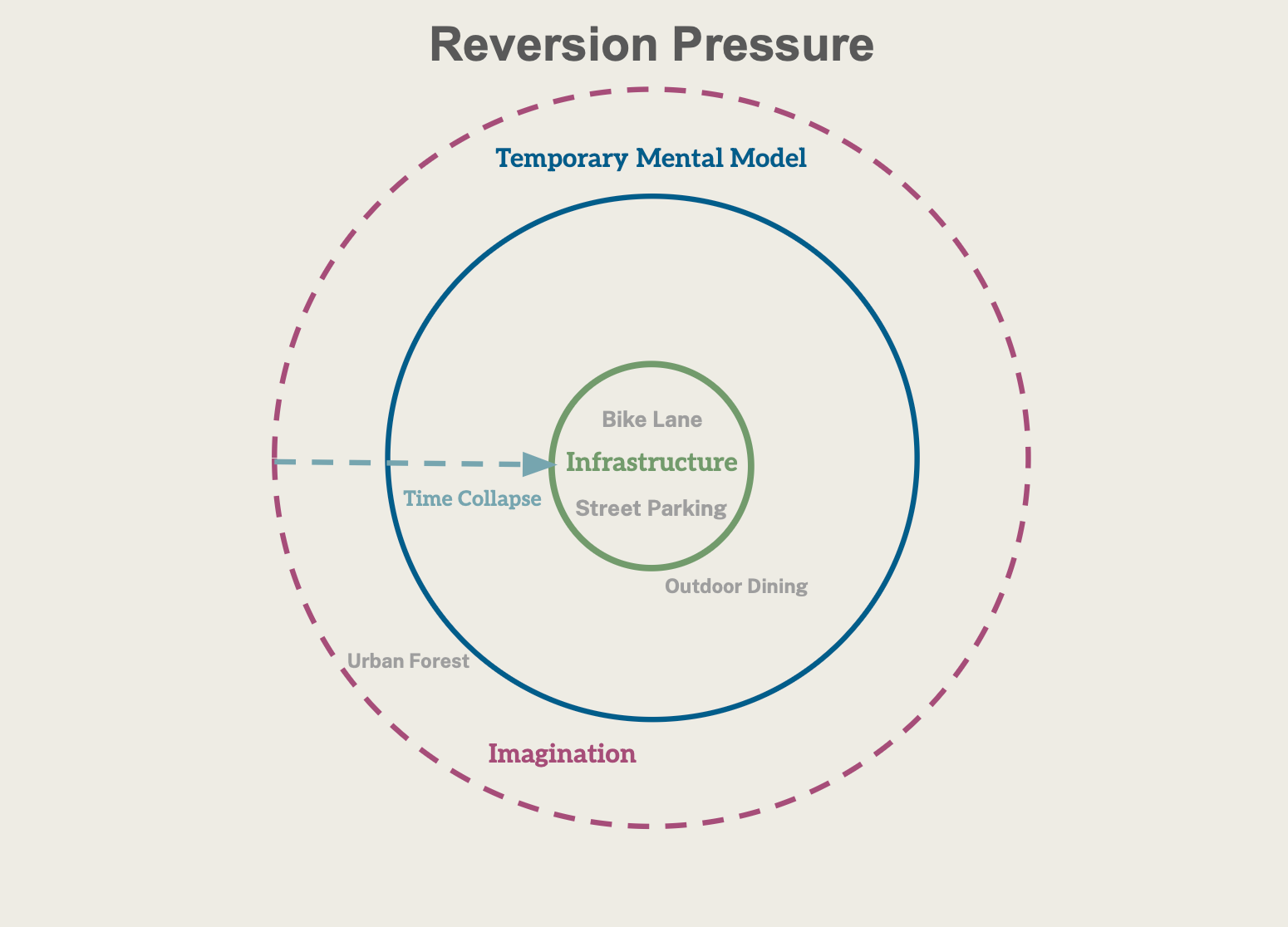
However, when the temporary infrastructure is removed, the expanded mental model is under pressure from time. People are reeducated by the existing infrastructure and the collective begins to forget that the temporary infrastructure is possible, save for the fervent. This does not happen immediately and leaves time for the infrastructure to be made permanent.
As outdoor dining has ended, as the years go on many have readjusted to NYC as it was but on a nice evening twitter will still show that many of us remember and long for the old days. Luckily, this has become a political consensus and so we will likely get it back.
Present day NYC
In NYC, we see temporary infrastructure all the time. In 2009, Janette Sadik Khan put out new chairs in Times Square prior to the redesign of the new plaza. In the pandemic we saw the proliferation of open streets and outdoor dining. Today, we have Summer Streets, School Streets, and Open Streets that all temporarily highlight alternate ways public space can be used.
Recently, Street Labs and the NYC DOT announced that they will run “soccer streets” in the open streets outside of NYC schools for 2 months prior to the World Cup. This is a brilliant maneuver that uses the concept I call “induced identity” to build a constituency.
Other than getting many young people excited about soccer, soccer streets will create a new life experience and accompanying sense of possibility about how streets can accommodate fun. However this will only largely impact the people who get a chance to experience it. If we do not capitalize on the expanded mental model, eventually many of them will also forget that child friendly streets are genuinely possible for the long term.
Outro
It is not always politically easy to introduce temporary infrastructure let alone solidify it, but if we want different futures to persist, we cannot rely on imagination alone: we must expand possibility through temporary infrastructure and then solidify the expanded possibilities before the physical world reasserts itself.
As we reflect on the vibrant days of outdoor dining when there was a creative energy in the air, let’s hope that the city council makes the moves required to bring this important program back in a permanent fashion. Otherwise, the concrete will have proven heavier than our imaginations.
By “mental model,” I mean the range of futures and behaviors people perceive as realistic, normal, or achievable