


It’s a cold NYC night, loud with the sounds of trucks. My family’s dog, a Jack Russell Terrier named Miss Penny Lane, trembles with fear as we get in the elevator.1 Walking out of our warm building, she runs toward the tree bed right outside the door. If I let her have her way, she will jump the tree guard, pee immediately, and run right back to the door, and I’ll be back in the warmth. If I tug her down the block, I’ll spend the next 10 minutes shivering while she tries to pull me home and away from the scary noises. Eventually she’ll give up and pee somewhere random. In my weaker moments, I let her jump the expensive2 tree guard and pee right next to the sign that says “please, curb your dog.” In these moments, I long for a place nearby I could take her where she is both permitted to and wants to pee.
We’re trying to solve an infrastructure problem with messaging.
Every busy dog owner faces the same question: when and where do our dogs go out? There are countless places we are told not to let them pee, marked with “Curb your dog” signs and tree guards…
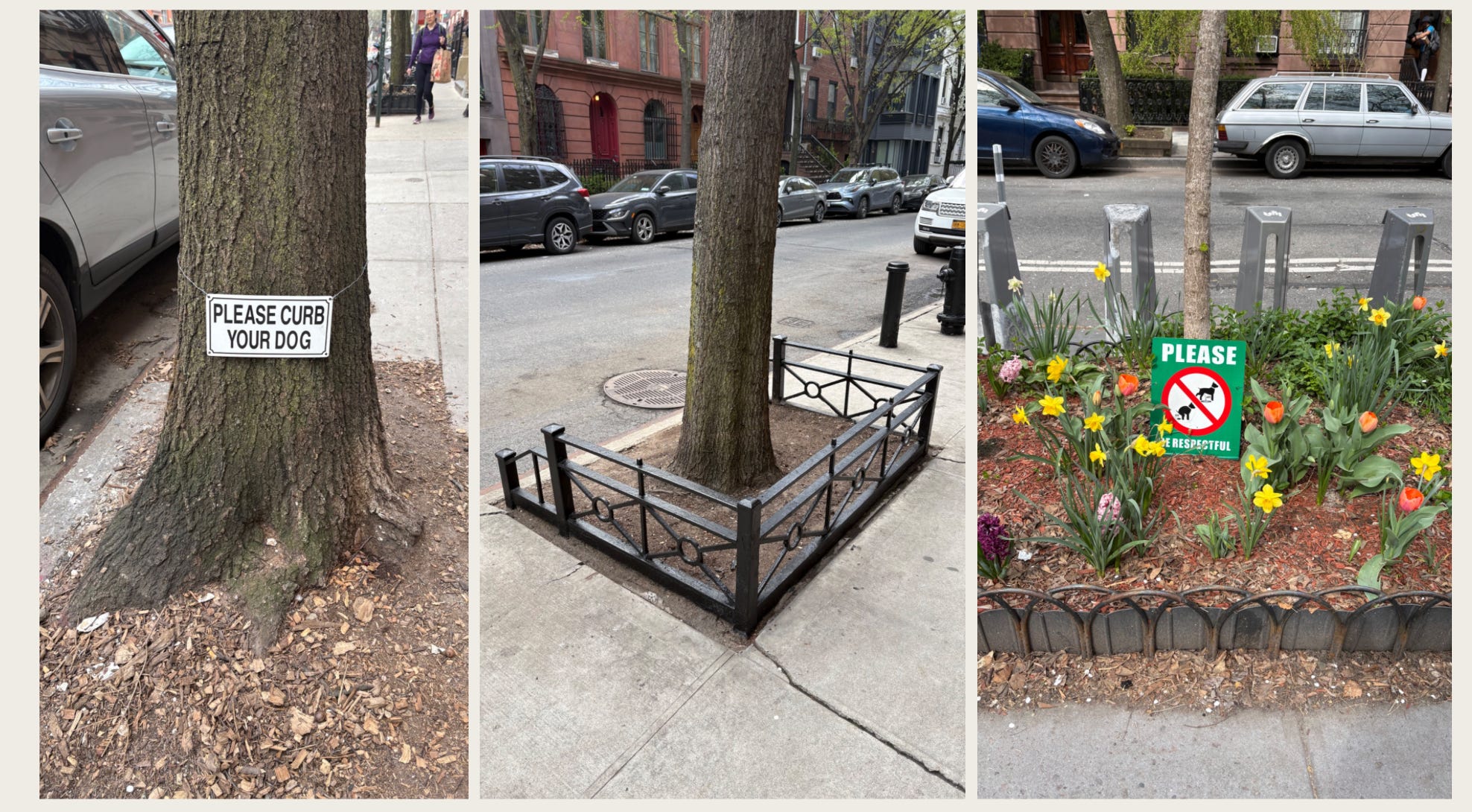
But they clearly don’t work.
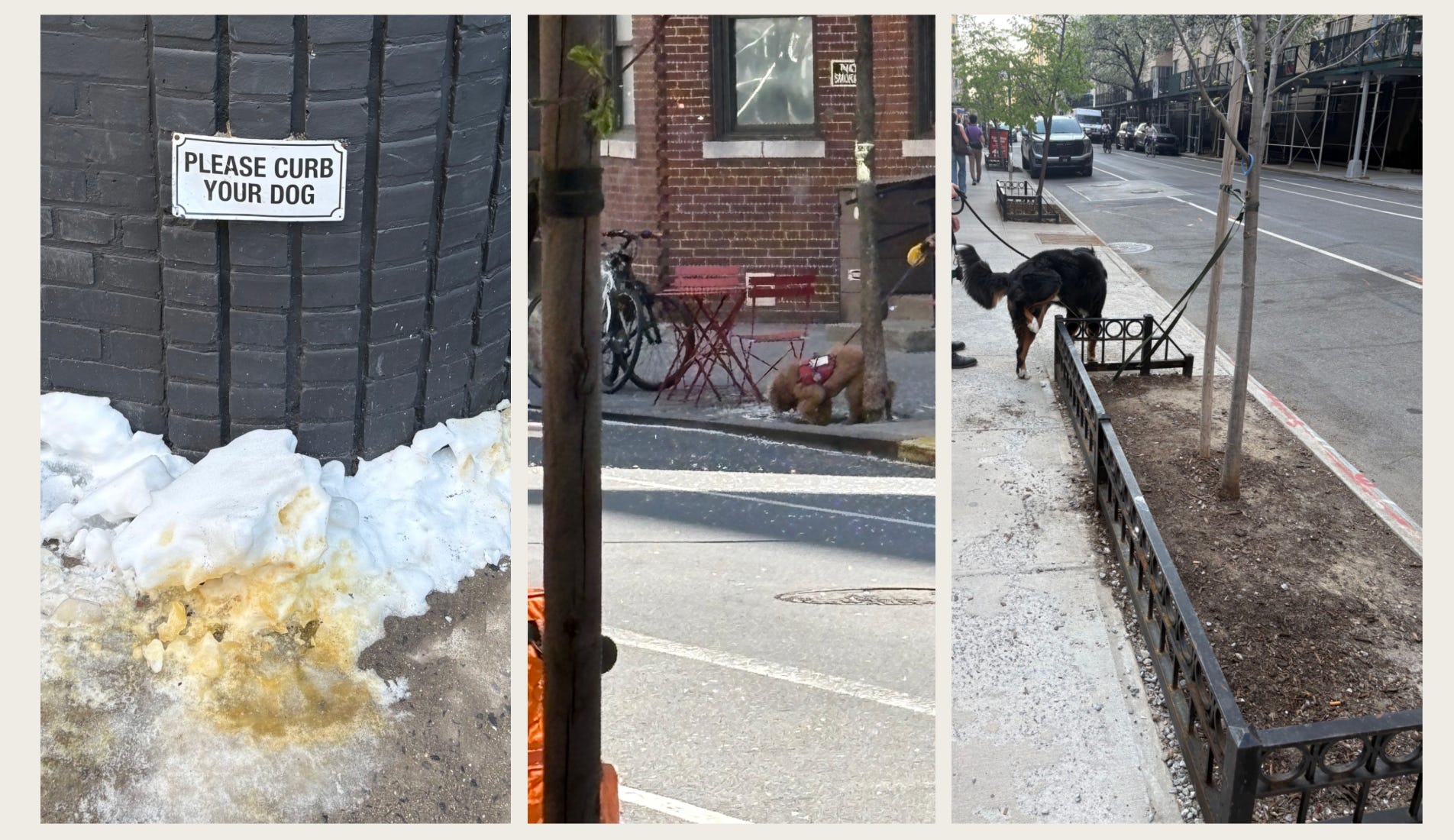
This is not just some prudish issue, it has costs for our green infrastructure that cools sidewalks, absorb stormwater, clean air, and make dense blocks livable. This is because Dog Urine Has Acute Impacts on Soil Chemistry in Urban Greenspaces. When a tree lives in a concrete box, there’s nowhere for pee to go when it rains. In a time of increasing droughts, the “Salt also draws out water from tree roots, further compounding water loss and simulating the effects of drought.”3
Additionally, dog pee produces the smell of baking urine that combines with baking trash to make that distinct NYC summer smell.
Dog pee is an inevitable byproduct of having dogs in NYC which clearly produces undesirable effects. However, when there is any conversation about dog pee, it revolves around how to stop dogs from peeing places, not about where they should instead pee to reduce these undesirable effects.4
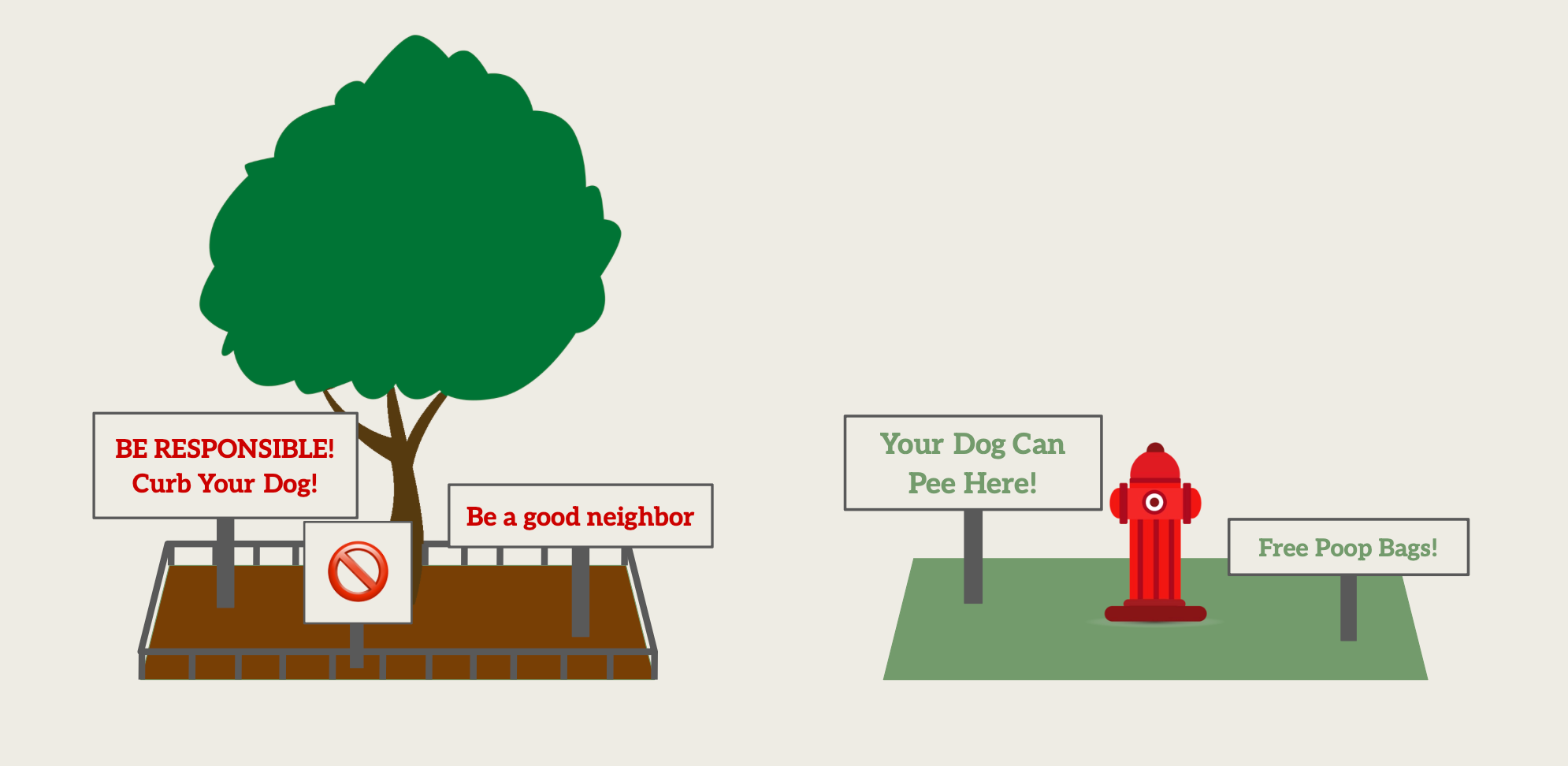
So, instead of trying to message harder about where dogs shouldn’t pee, what if we instead provide a place for dogs to pee that reduces their undesirable effects?
Why Dogs Pee on Trees: Countermarking
Next time you’re on the street and notice dog pee, see if there are other pee stains nearby. I’d predict there are. It turns out dogs actually want to pee where other dogs pee.
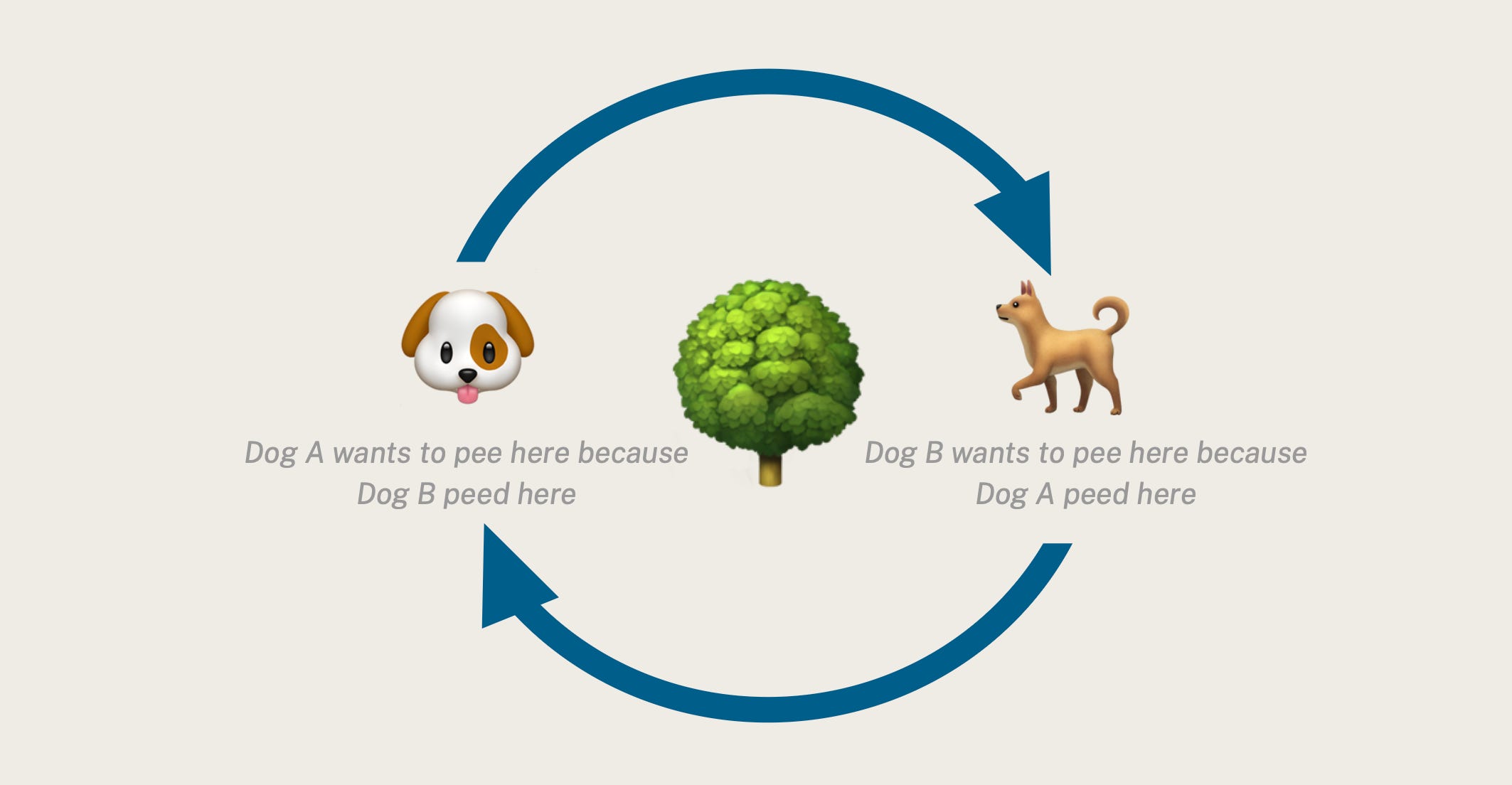
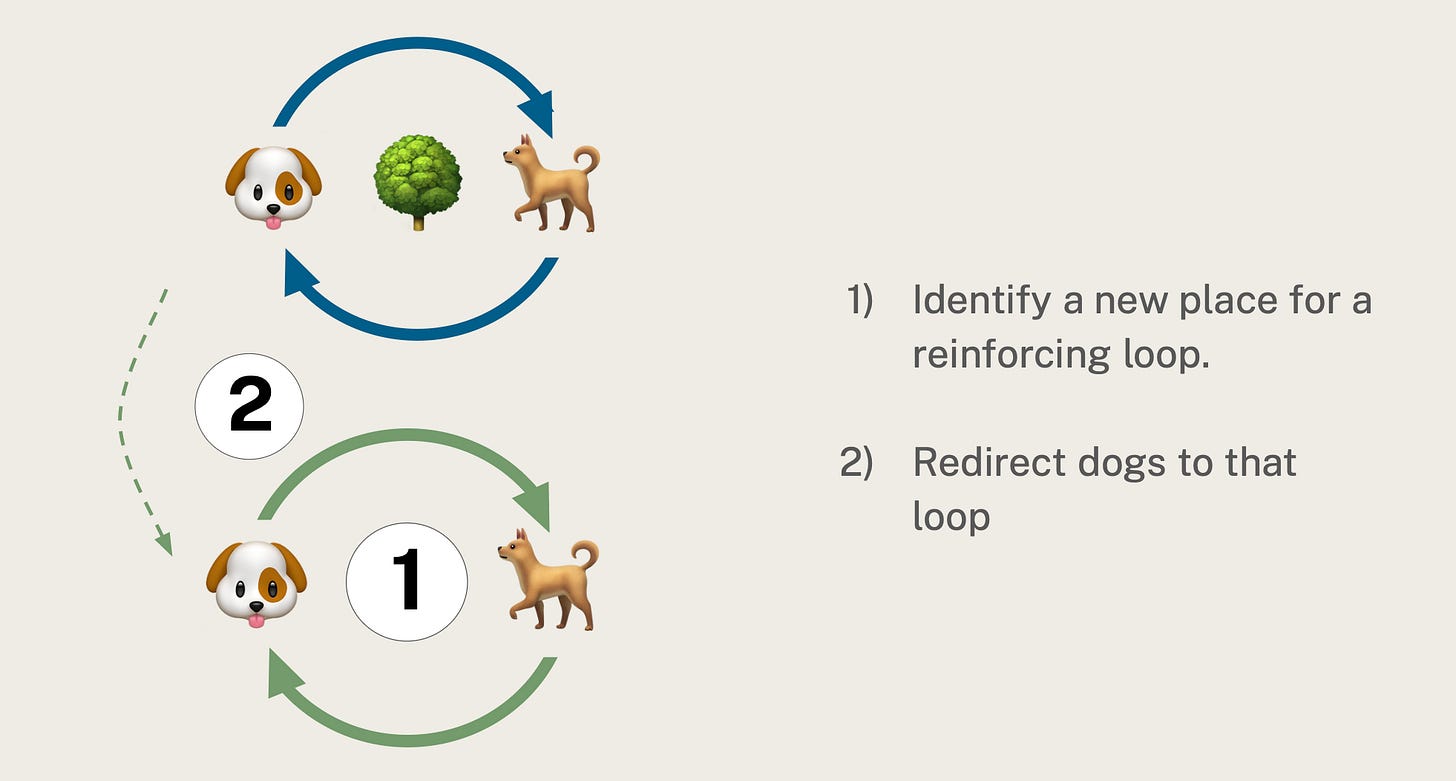
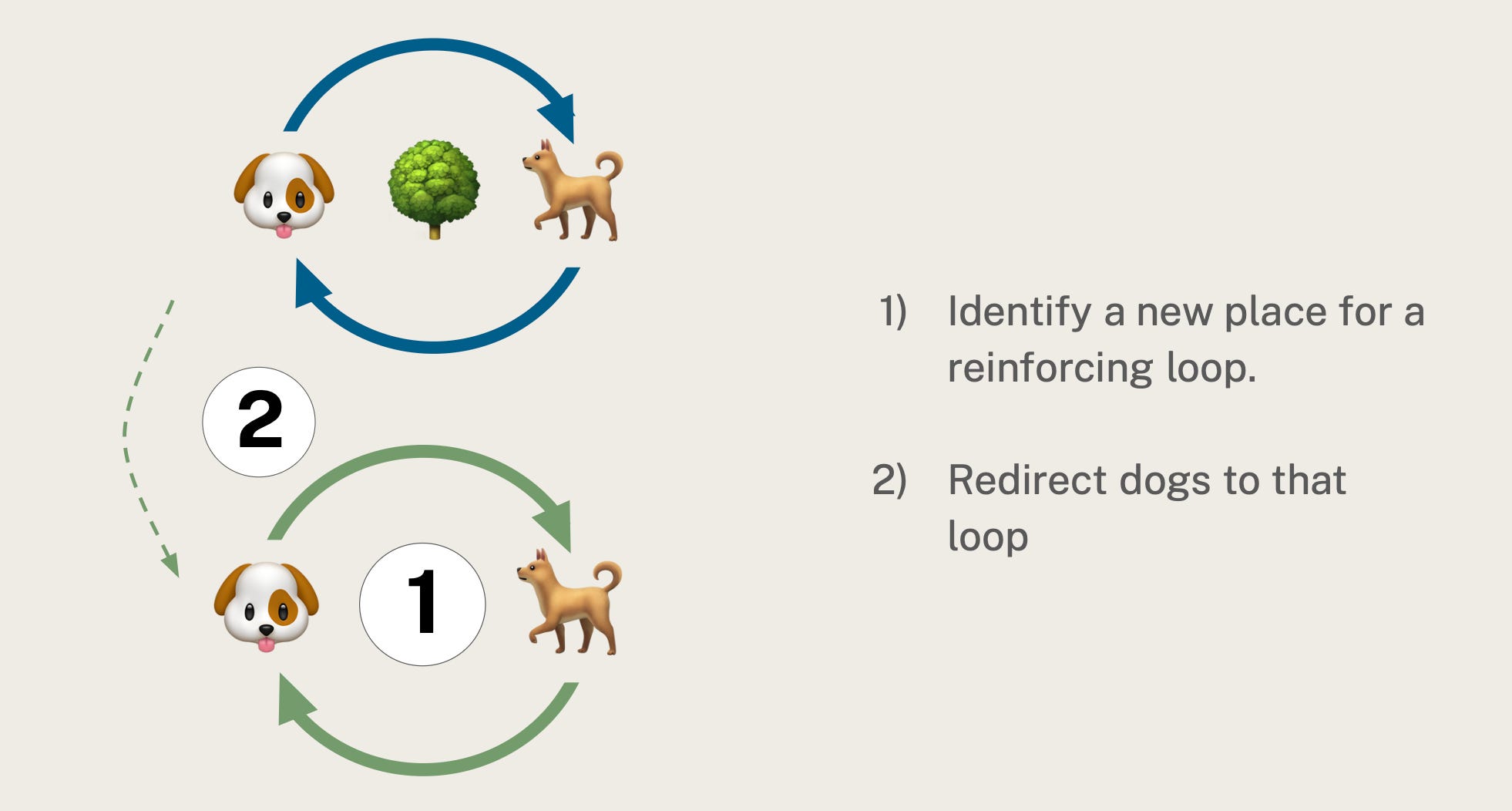
Dogs follow scent, not signs, which makes a reinforcing feedback loop.
This means our real task is to:
Identify a new place for a reinforcing loop that is compatible with urban life and realistic.
Redirect dogs to that new loop.
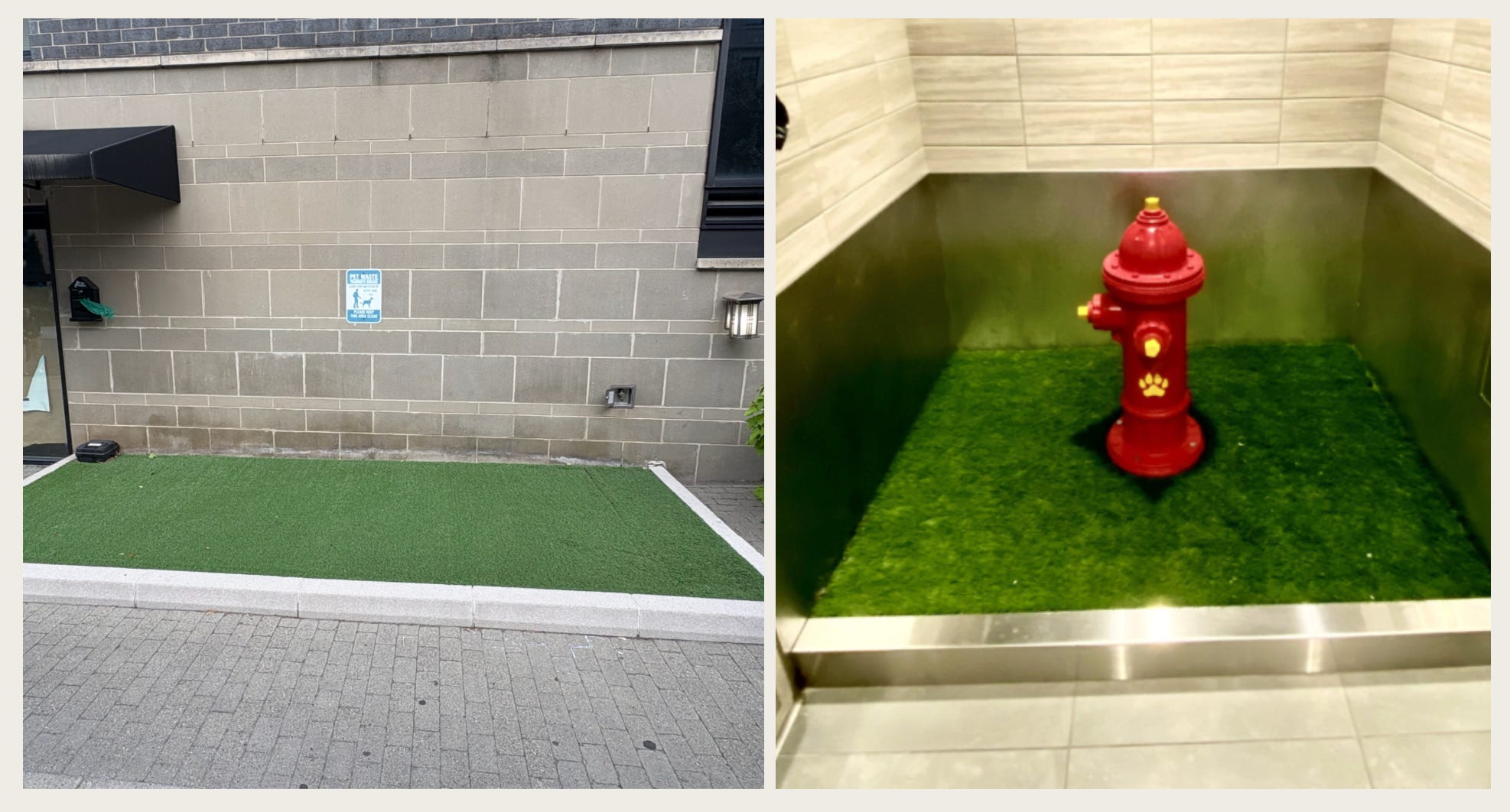
In fact, we already know this works. This same mechanism is employed in airports, but private developments, like this one I saw in Hoboken, have also adopted building dog pee rest areas. Instead of stopping dogs from peeing, they simply provide a desirable place for the dogs to pee that addresses the concerns.
Why ‘Curb Your Dog’ Signs Don’t Work
The phrase “curb your dog” was not well received even when it debuted. In fact, the double use of “curb” is so confusing that in 1956, two Harvard law students reached out to the Department of Sanitation for clarification. Someone responded, saying, “Little did I think that the personal habits of dogs could be of even academic interest to students of Harvard Law School...The sign has both meanings. It means, ‘Restrain your dog.’ It also means, ‘get him off the sidewalk’”
People also just don’t heed the signs.
As my dad so often tells me, “When we’re out of the city, I’m used to letting [Penny] pee anywhere. But now, we’re back, and the tree she walks up to has a sign that says ‘please curb your dog.’ My dog pees in the woods, and it’s totally fine! Why should I bring her to the curb? She’s uncomfortable enough as it is. The street is full of cars, and she wants to pee here in what feels like quasi-nature. Isn’t this being a good dog owner?”
The truth is that, as it is, the curb just isn’t a good place for dogs to pee. It doesn’t provide an obvious place for dog owners to lead their dog and is often loud and full of cars. The result is that it is easier to just let the dog pee where they want to, often in tree beds. This is a problem that can not be solved by messaging.
But one day on my block, everything changed.
A Better Urban Design Solution for Dog Pee
In early June, my dad texted in our family group chat: “Jack, you have to see what’s at the corner.” This is what I found, in all its glory.
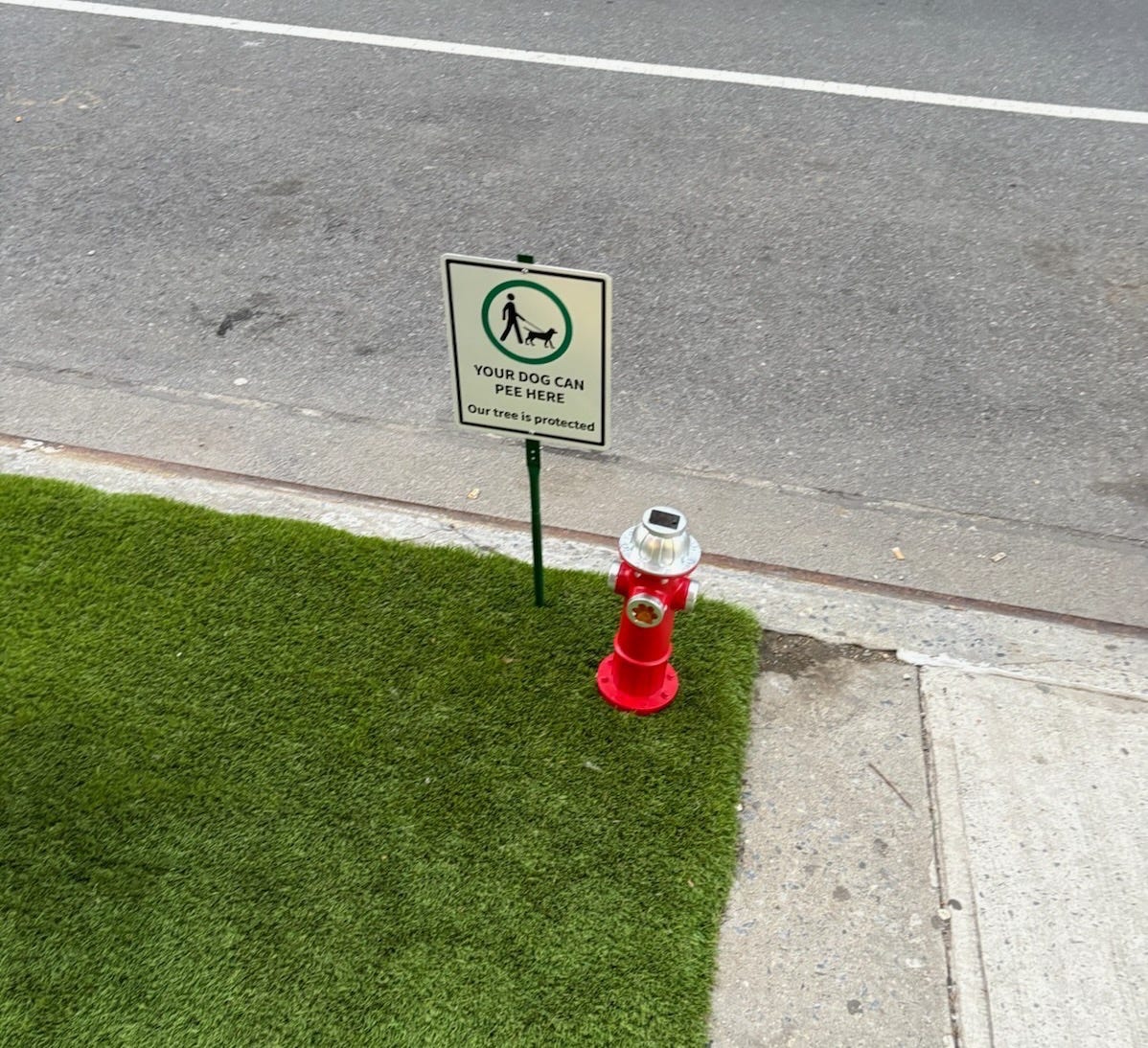
Someone had covered the tree bed5 with astroturf, put a fake fire hydrant, a sign that said “Your Dog Can Pee Here, Our Tree Is Protected,” and even a dog poop bag dispenser. They even built a protector around the trunk of the tree so the pee would not go on the trunk.
Penny got very comfortable peeing there very quickly. In fact, after a few days, she would even lead me there herself. Even my dad stopped letting Miss Penny Lane pee on the other trees. Suddenly, the ‘curb your dog’ signs and tree guards seemed to work as people acknowledged that they should bring their dogs to this new area. Or maybe they were just lured in by the free poop bags.6
I know this dog rest area worked because we would always see other dog walkers at this tree as well; sometimes we’d even strike up a conversation. These were the golden days. But, like many good things, they came to an end.
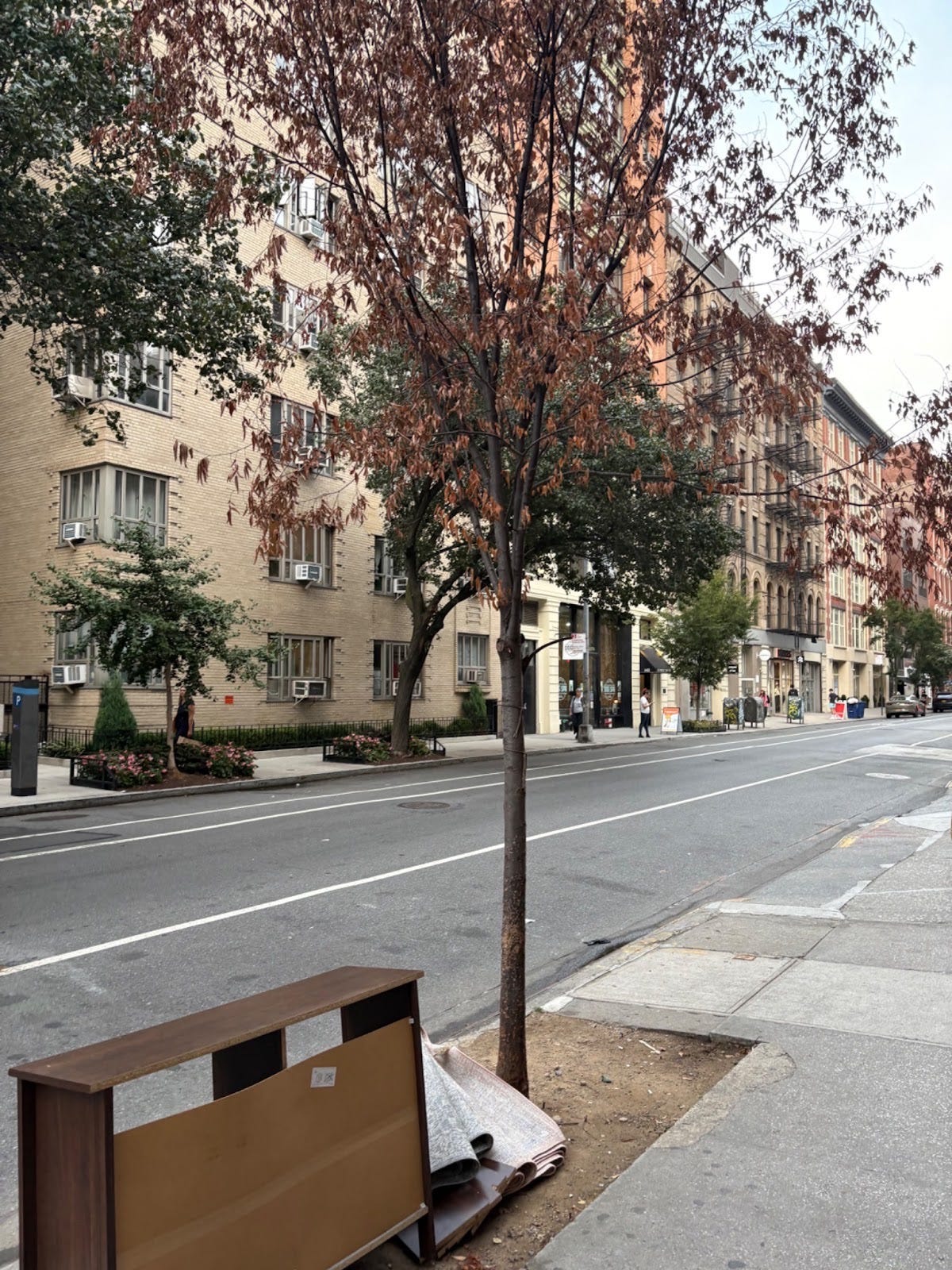
As some of you might have expected, the tree died. This may have been the result of the concentrated dog pee, or of the astroturf preventing water from reaching the soil. However the mechanism worked, so the next version just needs to be not on a tree.
What Cities Can Learn from a Failed (but Promising) Experiment
The loop redirection worked immediately. Behavior changed in days, and other dog walkers adapted without being told to.
The lesson is simple, and expands beyond dogs: when behavior reinforces itself, we should design with the loop instead of fighting it.
Yes, the tree died, but that was a design problem, not a mechanism problem, and shifting norms is much harder than refining a design. For example, instead of being on a tree, this rest area could be on the curb near a hose and storm drain so it can be cleaned. For more on this read the “Design Playbook” where I expand on this.
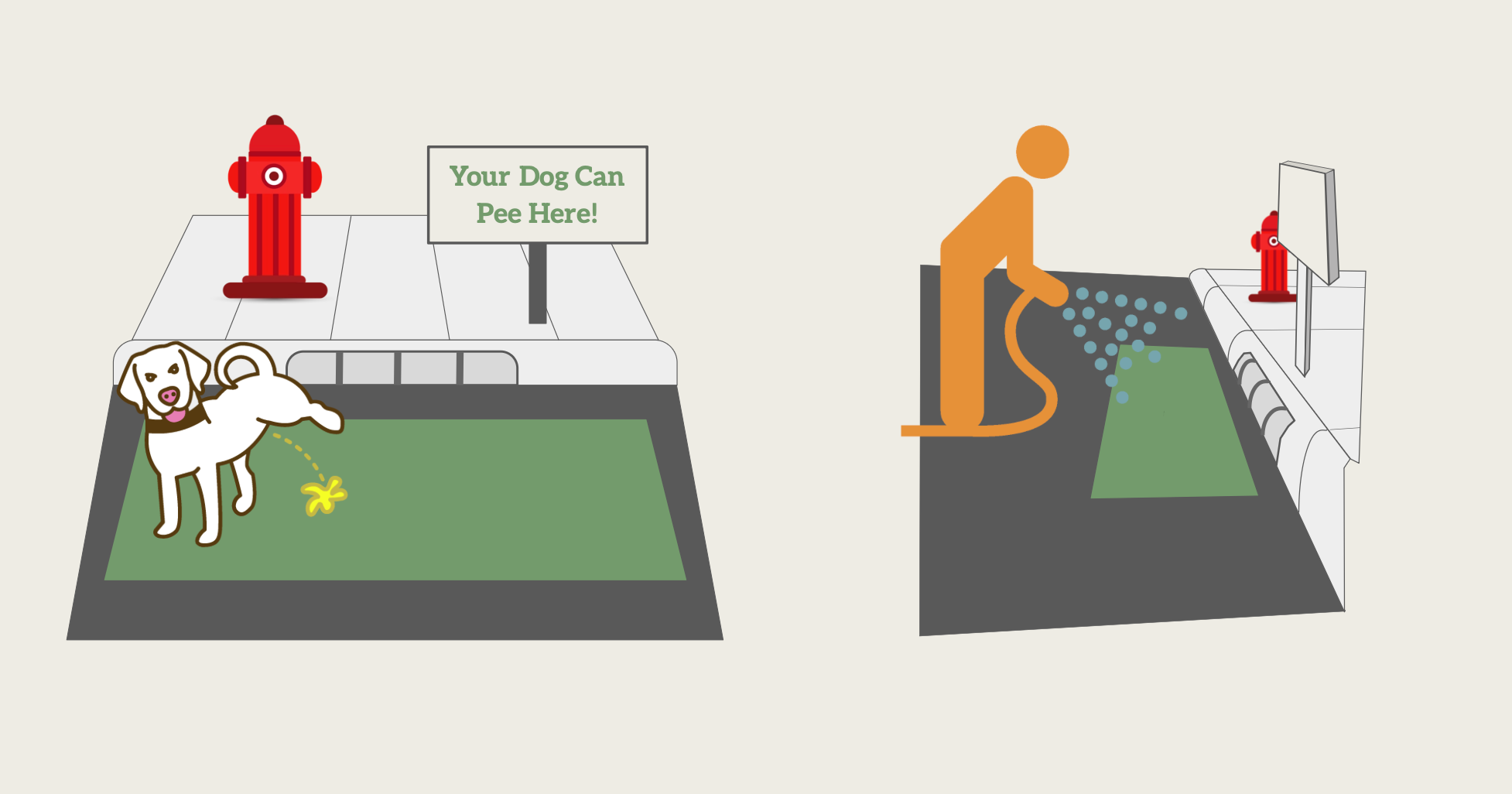
We don’t need to convince thousands of dog owners to care more. We just need to give them somewhere obvious to go, and the system will rearrange itself.
For too long the question has been how to stop dogs from peeing in a place, but the right question is where we want it to happen.
Do you want to try something similar in your neighborhood or think more about redirecting dog pee? Read this follow up “Design Playbook” post for a practical pilot proposal.

Are you someone who can do something about this?7 Reach out; let’s make it happen. I’m happy to help plan, raise money, pilot, and evaluate.
Thanks for reading! If you have made it this far thinking about dog pee, we might get along. If you’re excited about practical8 ideas for big changes with a little effort, stick around. This post is part of a series on how small design changes reshape cities
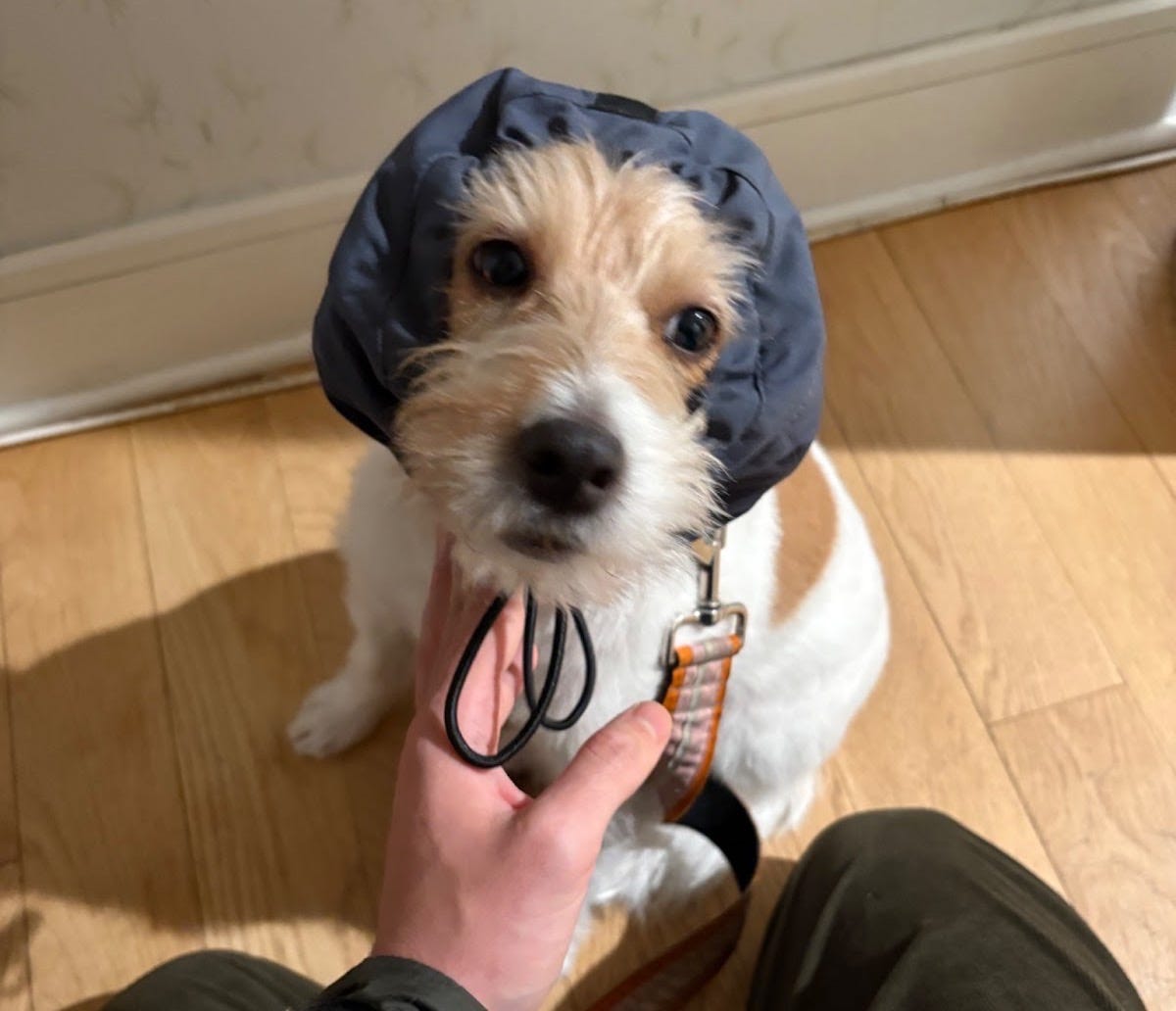
Miss Penny Lane is a particularly anxious dog, especially when there are loud trucks. I even tried buying her noise-cancelling headphones. Sadly, they didn’t work.
To learn more about the cost and difficulty of procuring a tree guard for a public NYC tree, read this blog post breaking down a Community Board member’s experience attempting to do so. newyorkabundance.substack.com/p/what-it-takes-to-add-tree-guards
Quote from a parks department rep cited here https://www.bloomberg.com/news/articles/2012-08-30/why-you-shouldn-t-let-your-dog-pee-on-trees
Unlike dog poop, which has gotten much coverage after this terrible winter, dog pee seems to take care of itself. It soaks into the soil or evaporates before we notice it. Because we can’t see it clearly, we can’t tell that our current solutions aren’t working, so we keep using them.
The tree was planted in 2024. You can see its history here, which doesn’t even reflect that it died. You can also track the tree growth on the block using google street view! https://maps.app.goo.gl/zpypxXeqjgHjeH487
Julie Menin, the new speaker of the city council, has introduced bills (Int 0281-2024) in the past to install dog poop bags. Could these ideas overlap? www.amny.com/news/nyc-trash-bins-dog-waste-bags/
The NYC tree ecosystem is VERY fragmented. Here are some stakeholders that come to mind: NYC Parks, Business Improvement Districts, individuals, neighborhood groups, block associations, nonprofits contracted by council district discretionary funds, park conservancies, Privately Operated Public Spaces, cemeteries, NYCHA campuses and probably more.
A good design isn't a good design unless it is feasible.
The hardest urban problems are often the smallest ones. This is a great example of designing for behavior instead of fighting it-redirecting the pattern rather than trying to eliminate it. That's where thoughtful design can make shared spaces actually work. And Atticus (the mini dachshund) would approve!